
Guide to Gear Hobbing: Definition and Process
Guide to Gear Hobbing: Definition and Process

In gear manufacturing, two things matter most: accuracy and efficiency. That’s why gear hobbing has become the industry’s preferred method for producing high-quality gears at scale.
Its ability to cut uniform gear teeth consistently, quickly, and with high precision has set the standard for modern gear manufacturing.
Gear hobbing is now recognized as one of the most efficient gear solutions for industries that demand precision and cost-effectiveness, including automotive, aerospace, and robotics sectors.
What is Gear Hobbing?
Gear hobbing is a machining process that uses a specialized cutting tool, known as a hob, to cut teeth into a gear blank. As the hob and the blank rotate in sync, the teeth are cut gradually and evenly to produce accurate and uniform gears.
This hobbing process enables manufacturers to achieve consistent accuracy in spur gears, helical gears, and splines, making it the preferred choice for high-volume gear production.
The Gear Hobbing Process
The gear hobbing process follows a series of precise steps to achieve its accuracy and efficiency:
Blank Preparation and Fixturing
The first step is mounting the gear blank on the machine. Typically, a chuck or fixture is used to lock it in place. Proper setup at this stage prevents vibrations or movement during the cutting process.
Hob Installation and Synchronization
Then, the hob is installed and synchronized with the blank according to the required gear ratio and tooth count. This step ensures that each tooth is cut to the correct size and spacing.
Feeding and Cutting
The hob and blank rotate together to cut the gear teeth in a continuous generating motion. This stage removes excess material while preserving accuracy.
Inspection and Post-processing
Lastly, the finished gear undergoes dimensional checks, deburring, and preparation for heat treatment. These steps ensure the quality, durability, and performance of the gear.
Advanced CNC-controlled hobbing machines now allow for micron-level accuracy, reducing setup time while improving repeatability for industries requiring ultra-precision.
Advantages and Limitations of Gear Hobbing
Gear hobbing is a popular gear manufacturing method, but it comes with both strengths and weaknesses.
◆Advantages
- High precision tooth profiles: Gear hobbing is capable of meeting DIN 6–8 quality grades. In practice, this means the teeth are cut to consistent shapes and spacing with minimal variation.
This level of accuracy ensures gears perform reliably even in demanding applications. - Versatility: Gear hobbing can produce a wide range of gear types, including spur, helical, splines, and timing pulleys, for diverse industries.
- Highly efficient and cost-effective: Because gear hobbing operates as a continuous generating process, it offers repeatability with shorter cycle times. It’s especially cost-effective for medium to high-volume production.
◆Limitations
- Higher initial investment: Since gear hobbing requires specialized machines and hobs, the upfront cost can be significant. For small-scale production of prototyping, it may be a steep investment compared to other simpler methods.
- Skilled operation required: Manufacturers need precise machine calibration and experienced operators to achieve a high level of accuracy.
If the process is not properly aligned or monitored, it can compromise the accuracy and overall performance of the gear.
Gear Hobbing vs. Gear Milling
The primary difference between hobbing gear and milling gear is the method used to cut the teeth. While gear hobbing uses a hob and blank to produce high-precision results continuously, gear milling forms each tooth individually with a cutter or end mill.
Compared to hobbing, the process is slower and less accurate, but more flexible. That flexibility makes gear milling more suitable for prototyping, custom gears, or small-batch production.
| Aspect | Hobbing | Milling |
| Efficiency | High: continuous cutting | Low: intermittent cutting |
| Accuracy | High: up to DIN 6-8 | Moderate: suitable for roughing |
| Best For | Precision gears, medium to large batch production | Prototyping, small batch productions, low-accuracy parts |
Compared with gear milling, the hobbing process ensures superior accuracy (DIN 6–8) and efficiency, making it the preferred option for medium to high-volume manufacturing.
Among all gear cutting methods, hobbing gears deliver the best balance between cost, speed, and precision, making them the backbone of modern transmission systems.
Applications of Gear Hobbing
Gear hobbing is widely used for its precision, consistency, and efficiency across many industries:
1. Automotive
The automotive industry relies on gear hobbing to produce transmission gears, differentials, and EV drive modules.
All these components need to maintain accuracy under constant stress and high operating speeds. Gear hobbing ensures consistent quality and reliable performance over the vehicle’s lifetime.
2. Aerospace
In aerospace applications, there’s no margin for error. Gears under extreme loads, high speeds, and varying temperatures — where even the slightest inaccuracy can compromise safety.
Gear hobbing provides the precision required to produce gears for complex systems, such as turbine gear sets and flight control gear units. This accuracy is crucial for maintaining safe and reliable aircraft operations.
3. Machine tools & automation
In the field of machine tools and automation, gear accuracy directly impacts the performance of the equipment.
With gear hobbing, manufacturers can produce high-precision servo gear reducers and robotic drive systems that last longer.
4. Renewable energy
As the renewable energy sector expands, the need for durable and precise gears continues to grow.
Gear hobbing makes it possible to produce large-module drive systems and turbine gears, which help drive sustainable power generation. These gears are engineered to handle heavy loads and continuous operation.
5. Robotics
Modern robotics requires gears that combine precision with compact size. Gear hobbing produces planetary gears, harmonic drive components, and reduction units that provide the accuracy needed for robotic arms, AGVs, and industrial automation robots.
6. Electric Bikes & Light Mobility
In electric bikes and scooters, gears must be lightweight, efficient, and reliable under varying torque. Gear hobbing ensures drive gears, reduction systems, and compact transmission modules meet the performance and durability requirements for light mobility solutions.
7. Industrial Machines
Heavy-duty industrial machines demand gears that can endure extreme stress and long duty cycles. Gear hobbing is widely used to manufacture press machine gears, mixers, crushers, and heavy conveyors, guaranteeing robustness and dimensional stability.
8. Pumps
Pumps, compressors, and fluid handling systems rely on precision gears for smooth operation. Gear hobbing produces internal gears, spur gears, and helical gears that ensure reliable torque transfer, high efficiency, and reduced wear in pumping systems.
9. Gearboxes & Gear Reducers
Gear hobbing is a cornerstone in the production of gearboxes and gear reducers, where high accuracy and durability are essential. From industrial reduction modules to precision gearboxes for robotics and EVs, hobbing guarantees efficiency and long service life.
Future Trends in Gear Hobbing
Advances in automation, technology, and sustainability practices continue to redefine the role of gear hobbing:
CNC smart machining
Gear hobbing machines are integrating sensors, error compensation, and tool monitoring for adaptive cutting.
These technologies help minimize human error, improve accuracy, and support real-time adjustments. This integration enhances gear quality and reliability in high-volume production.
Advanced tool coatings
Advanced tool coatings on hobs not only enable faster cutting speeds, but also extend operating life and reduce the need for replacements.
As a result, manufacturers benefit from lower production costs while maintaining the same level of precision.
Modular production lines
The increasing demand for efficiency has pushed many manufacturers towards modular production lines, which combine hobbing, inspection, washing, and heat treatment.
A streamlined system helps manufacturers save time, reduce errors, and deliver gears faster with the same quality.
Sustainable manufacturing
Sustainability is becoming a priority in the gear industry. Manufacturers are turning to energy-efficient machines and recyclable lubrication systems to reduce waste and lower energy consumption.
These manufacturing practices not only support environmental goals but also lead to greater cost efficiency in the long run.
Wu Hung Gear: Powering Industries With Precision
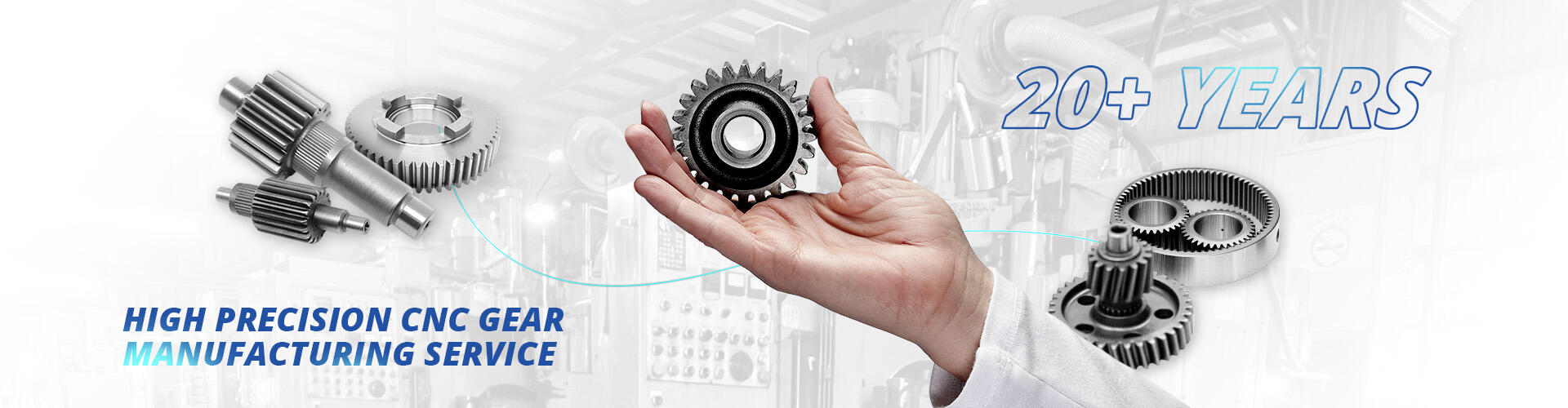
With over 20 years of expertise, Wu Hung Gear has established a reputation for precision, reliability, and innovation in gear manufacturing.
We provide end-to-end custom gear manufacturing, from design and prototyping to hobbing, heat treatment, and quality inspection. Every stage is designed to deliver consistent quality and precision.
That commitment shows in our product lineup.
Our expertise in gear hobbing, combined with strict adherence to international standards (JIS, DIN, ISO), guarantees world-class quality for every gear produced.
Our RC/Robotic Gear, for example, is produced through hobbing and skiving, with tolerances as fine as ~0.001 mm and customizable precision grades from JIS 3–5/ DIN 7–9/ ISO 7–9.
Our portfolio also includes spur gears, planetary gear sets, low-backlash helical pairs, custom gear shafts, and timing pulleys. Learn more about our full range of gear solutions, or contact us for specific requirements.
▲Check out this video of gear hobbing!