
Gears in Robotics: Power and Precision
Gears in Robotics: Power and Precision

Robots may be the most complex machines of our time, but their performance often comes down to something simple — gears. These small components regulate motion, balance torque, and provide robots with the stability and precision required for complex tasks. With the rapid growth of AI, sensing, and automation, gears no longer play passive parts. They’ve become the language that translates motor power into reliable, repeatable motion.
Today, robot gears are considered the backbone of robotics engineering, ensuring high performance, long service life, and safety across industrial and service applications.
The Role of Gears in Robotics
Gears are the core of power transmission in robots. They convert raw motor output into controlled motion by adjusting torque, speed, and direction to achieve repeatable movements.
But gears don’t only transmit power, they also refine it. They bring precision and reliability to robotic movements across industries.
High-precision robotics gears are essential for applications where accuracy, stability, and durability are non-negotiable — from factory automation to surgical operations.
Key Applications
1. Industrial robots
Gears give industrial robots the strength and stability to carry out demanding tasks in industrial environments, such as welding, assembly, and handling heavy payloads. For example, 6-axis robotic arms rely on high-precision gears to coordinate multi-joint movements under heavy loads.
Precision gearing systems enable robots to operate continuously with accuracy, durability, and efficiency throughout often long and intense production cycles.
2. AGVs
Automated guided vehicles rely on gears to convert motor power into smooth, controlled motion. This is how AGVs, such as warehouse shuttles, can navigate with accuracy across narrow or packed factory floors.
Robust robot gears in AGVs also improve energy efficiency, extending battery life and reducing downtime in logistics operations.
Gears in drive modules provide steady torque and speed control, allowing these vehicles to maneuver through tight spaces with minimal collisions.
3. Surgical robots
Precision is paramount in the operating room. Gears enable surgical robots to perform controlled, high-precision motion in constrained spaces. For instance, in Da Vinci type systems, gears enable stable, minimally invasive procedures.
Medical-grade gears and robots must also comply with strict cleanroom standards, making stainless steel and engineering plastics popular choices for these systems.
By regulating torque and motion at millimeter scales, they provide surgeons with the stability and confidence to carry out delicate procedures safely and effectively.
4. Service robots
Because service robots, like hotel concierges or delivery bots, often need to work alongside people, smooth and quiet operation is essential.
Gears provide controlled, stable motion, allowing these robots to move predictably and safely. Specific gear designs also reduce vibrations and noise.
Noise-reduction robot gears not only improve user experience but also extend the lifespan of the robot’s drive system.
Common Gear Types in Robotics
Different robotic applications call for different types of gears. Each has its unique properties to match the correct application:
Spur Gears
These gears are simple, efficient, and cost-effective. Easy to manufacture and maintain, spur gears offer reliable power transmission. They’re ideal for educational robots, direct motor drives, and compact modules.
Planetary Gears
Compact yet powerful, planetary gears provide high torque density in a coaxial design. Their excellent load capacity makes them perfect for robotics that need both strength and precision, such as joint modules, servo reducers, and collaborative robots.
Helical Gears
With angled teeth, helical gears run more smoothly and quietly than straight-cut gears. Their higher load capacity and low-noise operation suit heavy-duty arms, enclosed gearboxes, and positioning modules.
Bevel Gears
Bevel gears redirect power between shafts that meet at an angle, usually 90°. Their ability to shift motion across axes makes them a practical choice for robots that require smooth direction changes, such as in steering modules or vertical joints.
Worm Gears
Worm gears offer high reduction ratios and self-locking functions for safety. This combination is useful in robotics for lifting systems, safety drives, and agricultural or warehouse robots that need steady power without risk of reversal.
Rack & Pinion
Simple yet effective, rack and pinion systems are trusted for their ability to convert rotary motion into linear motion. They’re widely used in applications that require repeatable straight-line movement, including lifts, linear actuators, and pick-and-place modules.
Pulleys & Timing Belts
Pulleys and timing belts are designed to maintain smooth, quiet, and stable motion over a distance. They’re commonly integrated with stepper and servo motors in collaborative robots and AGVs for reliable performance.
Each of these robotics gears types contributes differently to speed, torque, noise control, and motion stability, making correct selection vital in robotic engineering.
Materials & Design Considerations
Factors like material choice, surface treatments, and design all play a role in a robotic gear’s durability, precision, and efficiency.
Gear Materials
Selecting the right gear material is as important as selecting the type because it determines how well a robot withstands stress, maintains precision, and operates over time.
This table highlights commonly used materials in robotics and where they deliver the most value:
| Material | Properties | Applications |
| SCM440 Alloy Steel | High tensile strength, excellent heat treatment capability | High-torque gear shafts, reduction modules |
| SNCM220 Case-Hardened Steel | Surface hardness, high wear resistance, long fatigue life | Small-module gears, precision gearboxes |
| A6061 / A7075 Aluminum | Lightweight, corrosion resistance, easy machining | High-speed robots, drones, mobile systems |
| POM / PA Engineering Plastics | Low friction, self-lubricating, quiet operation | Light-load modules, educational robots |
| SUS303 / SUS304 Stainless Steel | Corrosion resistance, stable under harsh conditions | Medical robots, cleanroom automation |
| Bakelite | Electrical insulation, vibration resistance | Control panels, converters |
| Cast Iron (FC200 / FCD450) | Excellent vibration damping, good machinability | Industrial gearboxes, pumps, heavy machinery |
| Bronze (Phosphor Bronze, Aluminum Bronze) | High wear resistance, anti-galling, works well with steel gears | Worm gears, bearings, marine equipment |
| Nylon / Composite Materials | Lightweight, noise reduction, cost-effective | Consumer robotics, office equipment |
| Powder Metallurgy (Sintered Steel) | Cost-effective, good dimensional accuracy, suitable for mass production | Automotive gears, small precision modules |
Wu Hung specializes in advanced gear solutions, offering CNC precision cutting and customized surface treatments to meet global performance standards.
Design Factors
Beyond materials, design choices also play a key role in gear performance:
- Backlash control: Smaller gaps between teeth (or tighter backlash) mean smoother motion and more accurate positioning.
- Lightweight structures: Lighter designs and materials reduce energy consumption and improve efficiency for mobile robots.
- Surface treatments: Coating or hardening strengthens the gear surfaces and improves resistance to wear, fatigue, and corrosion, extending service life.
- Modular design: Modular designs simplify maintenance and component replacement because gears can be swapped or replaced quickly.
This trend toward modularity is also shaping how gears are assembled and delivered in robotics.
Integrated solutions, such as Wu Hung's custom gearbox set, show how multiple gear types and versatile materials can be packaged into a single assembly to meet diverse robotic requirements.
Future Trends
Robotics is moving fast, and gears are keeping the pace too. Emerging trends in design and production are shaping how gears drive the next stage of robotics advancement:
Miniaturization & Precision
The push for precision and compact design is fueling the demand for micro-gears in surgical and biomimetic robots.
These tiny, high-precision components enable robots to perform delicate movements in extremely confined spaces with stability and reliability.
Smart Gearboxes
Gears are getting smarter. By adding sensors for load, angle, and temperature, gearboxes can monitor their own condition and predict maintenance needs.
The integration keeps robots running longer, safer, and with fewer unexpected breakdowns.
Advanced Manufacturing
New manufacturing methods, such as 3D printing metal, are reshaping how gears are made. Metal and composite gears can be prototyped quickly and cost-effectively.
This also comes with more design freedom. Complex designs that are difficult to achieve with traditional manufacturing methods can now be produced with speed and accuracy.
FAQs
Q1: How do I choose the right gear material for a robot?
Consider your application’s load, environment, and budget.
For example, if you need high torque capacity in demanding environments, alloy steels are ideal for their strength and durability. Or, if the priority is low noise and cost efficiency, engineering plastics may be the better choice.
For guidance on material sourcing and selection, consult Wu Hung Gears.
Q2: How can backlash in robotic gears be reduced?
Backlash, the clearance between gear teeth that causes lost motion, can be reduced by using harmonic drives, preloaded designs, precision tooth profiles, and thermally stable materials.
Q3: Can gears be integrated directly into motor modules?
Yes. Many servo motors come with integrated gear systems that include encoders, housings, and lubrication. A modular design reduces space requirements and simplifies installation.
Drive the Future of Robotics with Wu Hung Gear
Gears are the backbone of precise robotic control. As robotics and technology evolve, selecting the right gear type, material, and design will directly influence performance and service life.
Wu Hung Gears offers a shortcut to reliability and efficiency. Our one-stop solution for gear manufacturing takes care of every step, from design and material selection through to mass production.
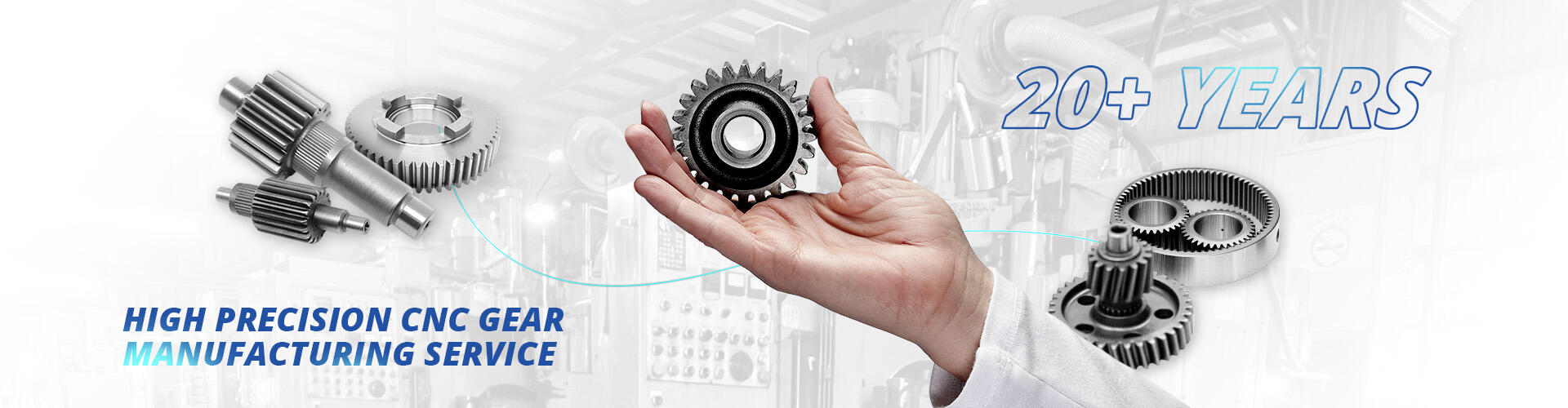
With over 20+ years of industry experience, high-precision equipment, and strict quality control, Wu Hung Gear continues to power the future of robotics. Partner with Wu Hung Gear to bring your robotics solutions to life.